The spine list
Eight to twelve items you buy almost every week form the spine. Everything else is an occasional orbit.
Intake
This long-form page explains how we discuss food volume, variety, and appetite in educational settings only. The tone stays descriptive. We do not interpret symptoms, assign diagnoses, suggest that any sensation ought to change, or provide medical nutrition therapy. This is not a substitute for care from your GP or an HCPC-registered dietitian.
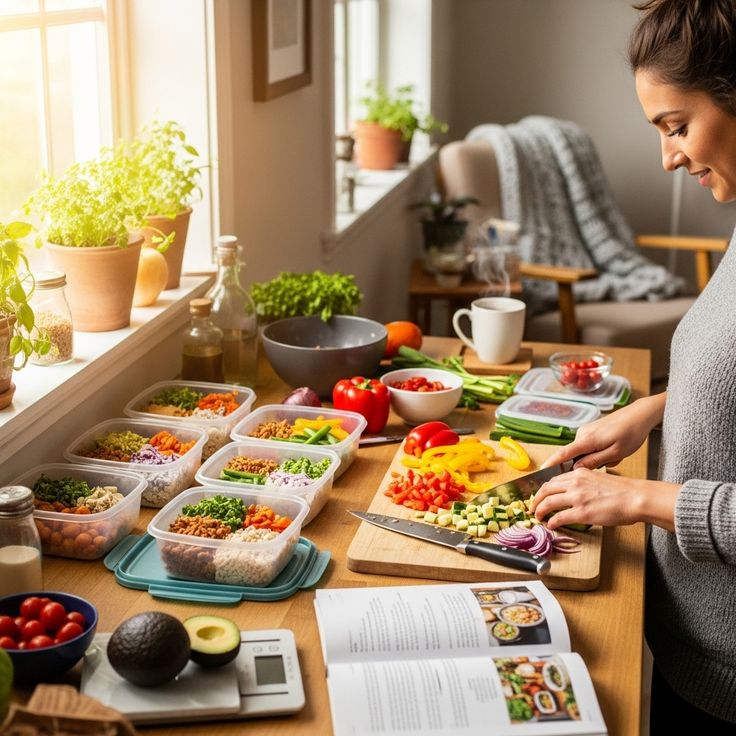
Many adults carry a silent courtroom into the kitchen: every bite cross-examined. Our workshops experiment with different vocabulary—curious, tired, distracted, satisfied—so the page of a notebook reads more like weather than judgment.
A single line per meal is enough at first: time, what you ate in broad strokes, and one adjective about how sitting down felt. Over several weeks those lines may reveal repetition you had not noticed, such as skipping a midday pause when meetings stack up.
That pattern awareness supports planning. It does not tell you that any feeling is wrong or must be different.
You can use paper, a notes app, or a voice memo transcript. Consistency of medium matters less than consistency of honesty.
Log time and meal type only. No commentary yet.
Add a single word about atmosphere: rushed, shared, quiet.
If you want, add low / medium / high without linking it to virtue.
Read aloud once. Decide whether any line still feels true.
Illustrations in our PDFs use hands, side plates, and ladles because those tools already live in most homes. Ranges acknowledge that appetite shifts with sleep, stress, and season—even when the recipe card stays the same.
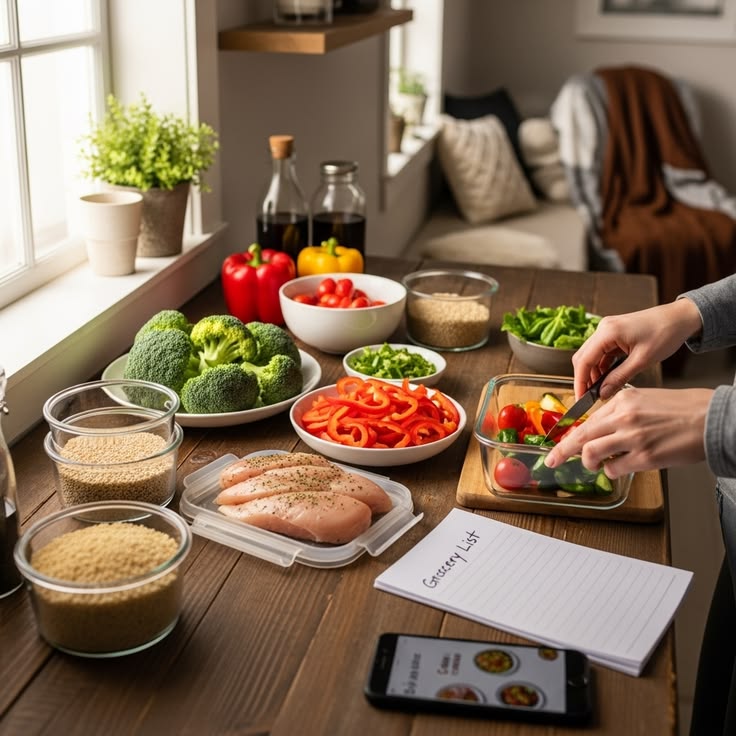
Templates repeat a skeleton—protein, grain, vegetables—so the grocery list stays predictable while flavours rotate. That repetition is a logistics choice, not a rule about what your body needs on a given night.
Eight to twelve items you buy almost every week form the spine. Everything else is an occasional orbit.
We note which items benefit from choosing in person so you do not feel obliged to optimise every aisle online.
A dedicated line for “eat first” containers reduces silent waste and quiet guilt.
Drinks you already tolerate can share the table. We do not tie volumes to outcomes.
Produce shifts; the workflow of rinse, chop, store stays familiar.
Dates on containers beat memory when households share a fridge.
One line on the list records what ran out before the next shop.
Individualised medical nutrition therapy, eating disorder treatment plans, and sports-specific fueling strategies require professionals licensed in your jurisdiction. We celebrate that boundary because it keeps our materials appropriate for a wide public audience.
If reading here raises questions about your personal health, pause and book time with someone qualified to answer them. Our contact form is for studio services and informational products, not emergencies.
We provide general education only. Seek regulated clinicians for personal medical nutrition questions.
Drizelonphquidz offers general informational content about everyday meals and kitchen planning. We are not a healthcare provider, medical clinic, or regulated dietetic service. We do not diagnose, treat, cure, or prevent any disease or medical condition, and we do not promise or guarantee specific results or outcomes. Paid offerings, where available, are limited to educational materials or general planning conversations—not medical nutrition therapy, personalised dietetic treatment, or prescription of therapeutic diets. For medical dietary advice in the UK, consult your GP, NHS services, or a dietitian registered with the Health and Care Professions Council (HCPC). Registered business details and policies are linked in the footer.